
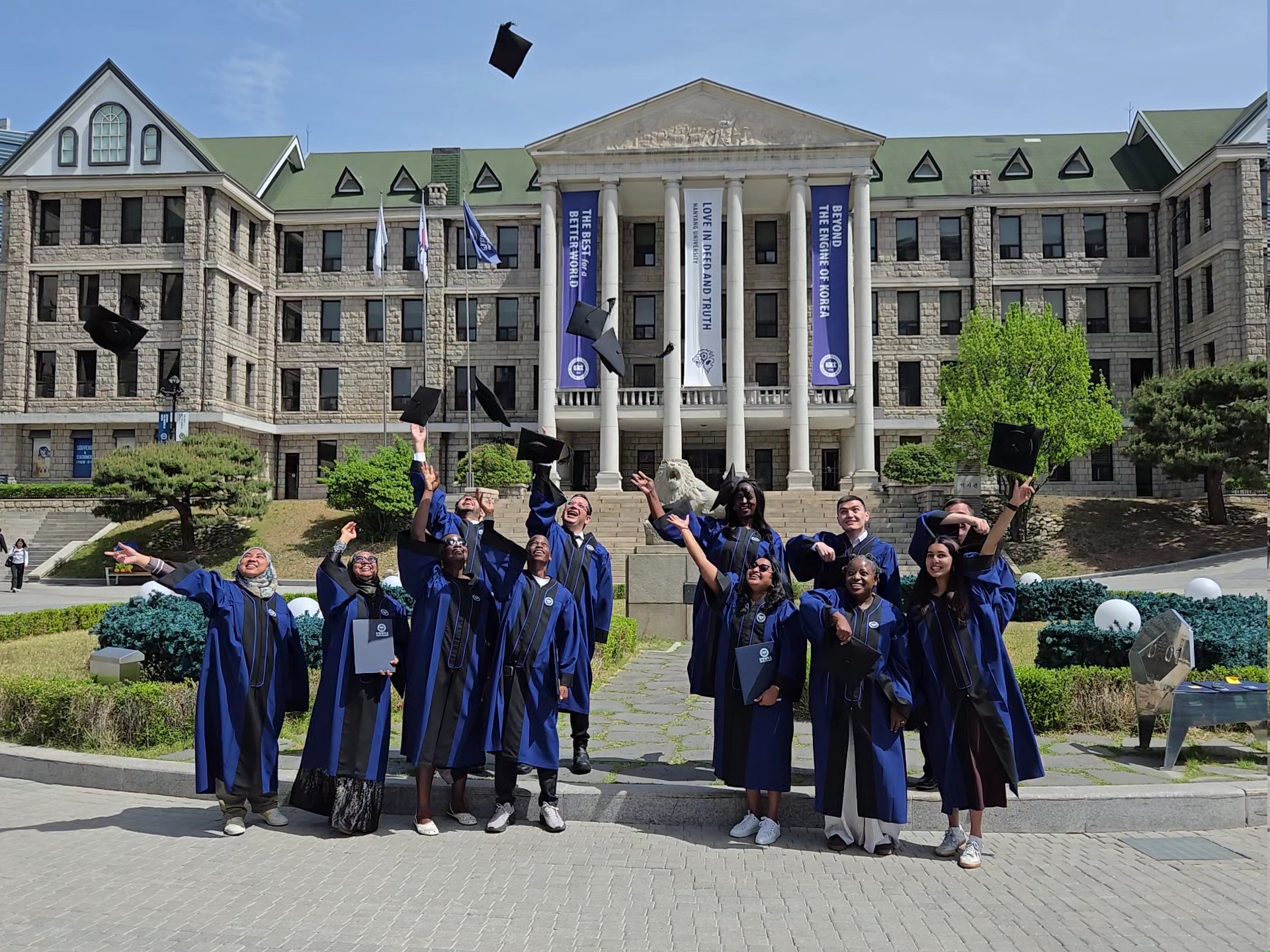
Seoul, Republic of Korea — 23 April 2026

The World Customs Organization (WCO), in partnership with the Customs Cooperation Fund Korea (CCF-Korea), successfully concluded the third edition of the BACUDA Scholarship Programme on Data Analytics at Hanyang University in Seoul, Republic of Korea. The Programme, which ran from 26 January to 23 April 2026, brought together twelve Customs officials from Botswana, El Salvador, Eswatini, Fiji, Honduras, Kenya, Malaysia, Maldives, Mauritius, Turkmenistan, Uzbekistan, and Zambia, equipping them with advanced capabilities in data analytics and artificial intelligence (AI) for modern Customs operations. This initiative forms part of the WCO Strategic Plan 2025–2028, specifically contributing to its focus area on Technology and Innovation.
Delivered by Hanyang University — a leading institution with substantial expertise in data science education and international research — the Programme offered a rigorous 12-week curriculum that combined academic coursework with practical Customs case studies. Participants received training across a broad range of modules, including Python programming for Customs applications, data collection and cleaning, data visualization, applied statistics, machine learning for risk profiling, natural language processing, and the application of WCO BACUDA algorithms, such as LITE-DATE and AI-HS. The curriculum was further enriched through data analytics e-learning delivered via the WCO CLiKC! platform and practical use cases shared by the Korea Customs Service.

In addition to technical training, the Programme incorporated dedicated modules on data strategy, data governance, and international Customs trends. Field visits to Incheon Airport Customs and Busan Customs provided participants with direct exposure to data-driven Customs operations in practice, complementing the classroom learning experience.
A central feature of the Programme was the capstone project, through which participants designed and implemented analytical models addressing concrete Customs challenges within their respective administrations. Working under the supervision of academic tutors and WCO experts, scholars developed final research papers demonstrating advanced analytical skills and strategic problem-solving capacity. Projects addressed a wide range of operational challenges, including fraud detection, HS classification, risk targeting, and AI chatbot development for Customs applications.
Upon completion of the Programme, the twelve scholars return to their administrations equipped with practical methodologies, analytical tools, and implementation experience to drive the transition towards evidence-based and intelligence-led Customs operations. They are positioned to serve as data analytics experts within their respective organizations, contributing to broader institutional efforts to modernize Customs practice.
The WCO BACUDA Project will continue to support Member administrations through this Scholarship Programme and related activities, with the long-term objective of strengthening analytical capacity across the global Customs community and accelerating the shift towards data-driven Customs administrations.
