
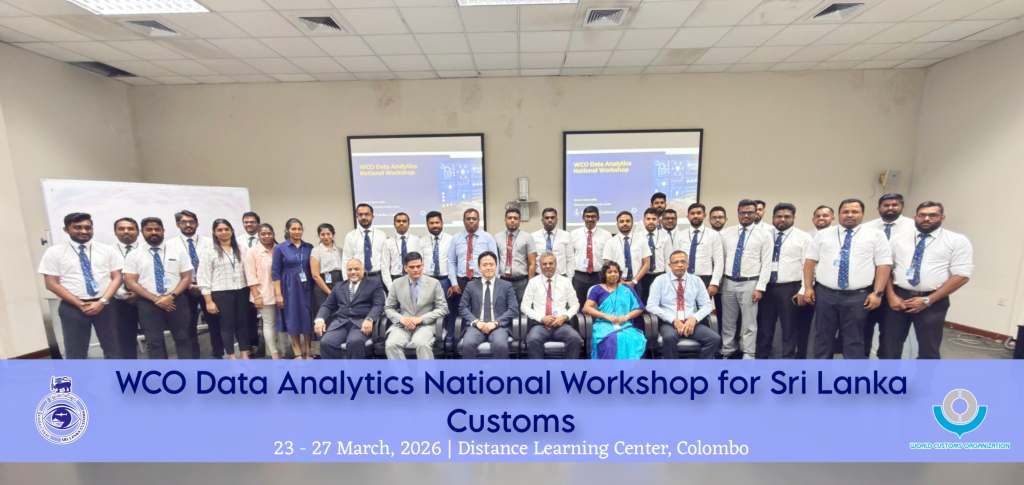
From 23 to 27 March 2026, the World Customs Organization (WCO), under the BACUDA Project and with the support of CCF Korea, conducted a National Workshop on Data Analytics for Sri Lanka Customs in Colombo. The programme followed a structured two-module approach, combining mandatory pre-work through WCO e-learning courses with a five-day in-person workshop. These activities aimed to strengthen Sri Lanka Customs’ technical capacity in data analytics, artificial intelligence (AI), and evidence-based decision-making.
During the preparatory phase, participants completed WCO e-learning modules on the CliKC platform, focusing on the foundations of data analytics and data quality management. This ensured a common conceptual understanding prior to the practical sessions. The in-person workshop was organized around five thematic pillars. It commenced with a presentation by Sri Lanka Customs on its current analytics environment, providing an operational context for subsequent discussions. WCO experts then introduced the BACUDA initiative, including its suite of AI tools and models.
Capacity-building sessions covered key concepts in AI and data analytics, including generative AI and real-world Customs applications. Practical examples from member administrations illustrated the use of data-driven approaches in risk scoring, anomaly detection, and trade facilitation. Hands-on technical sessions formed a core component of the workshop. Participants gained practical experience using the LITE DATE algorithm, including loading declaration data, feature enhacement, model development, and interpreting analytical outputs. A dedicated session on computer vision introduced image recognition techniques, such as YOLO and R-CNN, and explored their potential application at ports and border crossings.
The institutional readiness component focused on the WCO AI/ML Readiness Self-Assessment Tool. Participants assessed Sri Lanka Customs’ preparedness across five dimensions: governance, data governance, technology infrastructure, organizational culture and leadership, and analytical capabilities. This exercise helped identify gaps and establish a baseline for future development. A complementary session, supported by a Korea Customs Service case study, highlighted the importance of robust data governance frameworks. Participants translated these recommendations into a time-bound AI implementation roadmap, structured across short-, medium-, and long-term priorities.
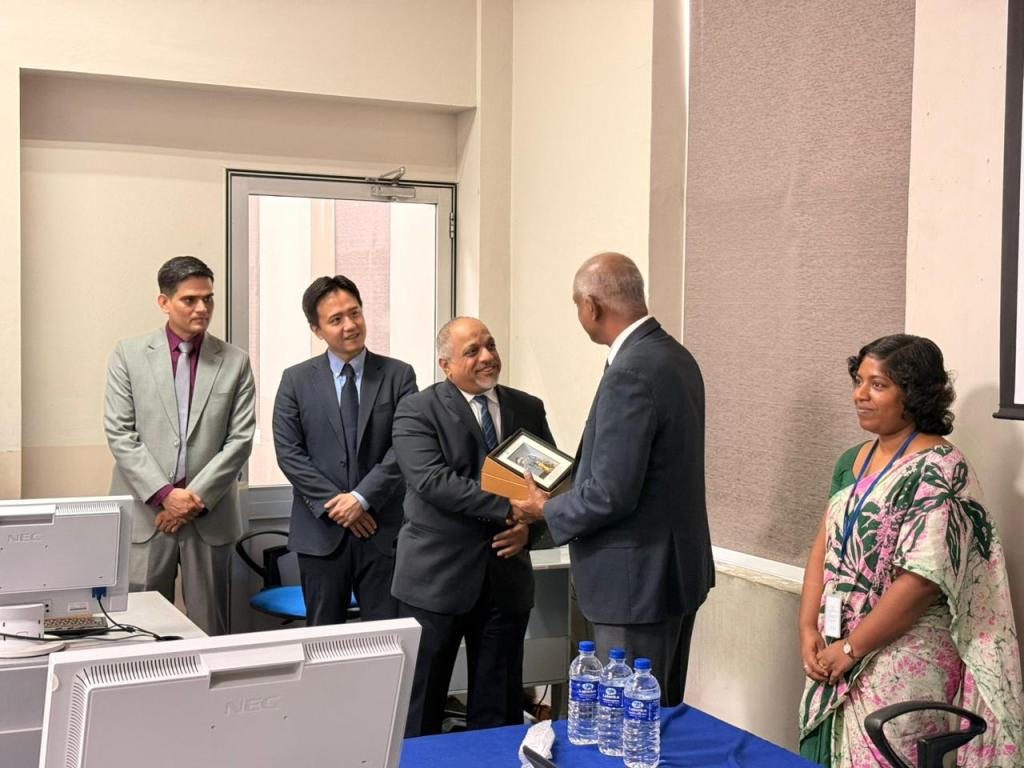
In his closing remarks, Mr. Seevali Arukgoda, Director General of Sri Lanka Customs, expressed appreciation to the WCO and CCF Korea for their support and commended the practical relevance of the workshop. He emphasized the importance of implementing the outcomes in the coming months. WCO experts concluded by highlighting the need for sustained investment in data governance, gradual adoption of AI solutions, and the promotion of a data-driven culture. The workshop reaffirmed the WCO’s commitment to supporting Sri Lanka Customs in advancing its data analytics and AI capabilities.
 WCO BACUDA Project