
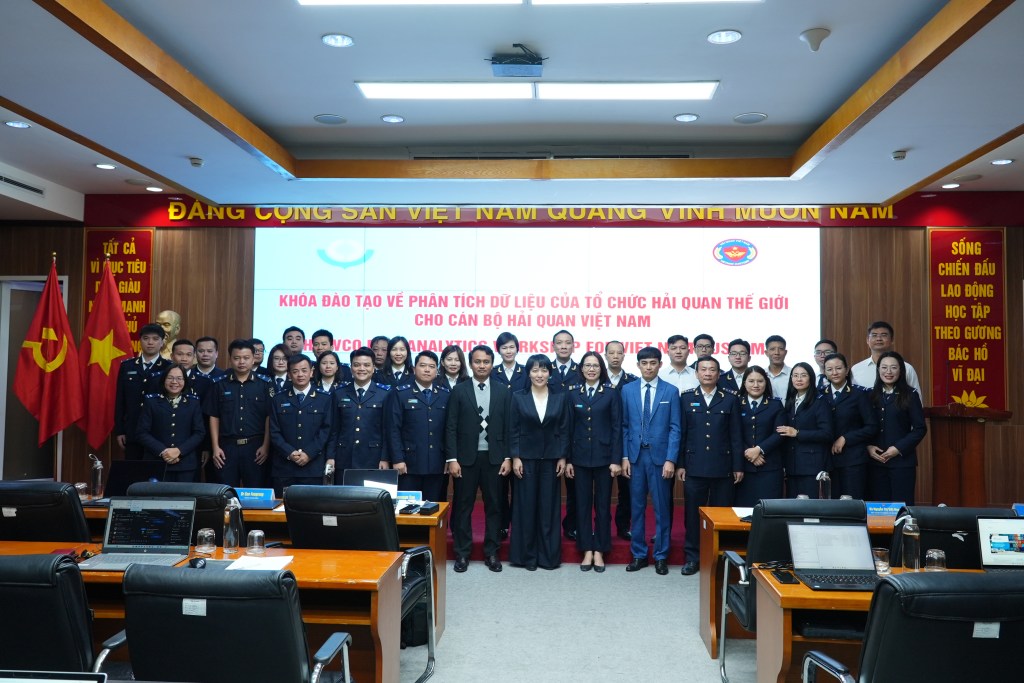
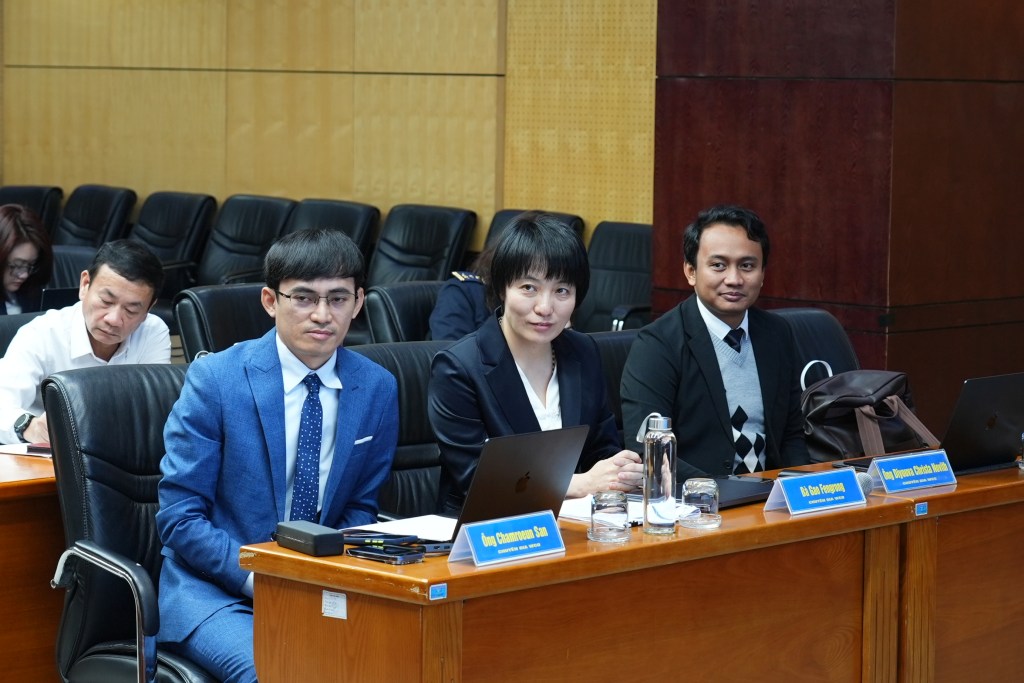
From 1 to 5 December 2025, the World Customs Organization (WCO), under the WCO BACUDA Project and with the support of CCF China, held a comprehensive National Workshop on Data Analytics for Viet Nam Customs in Hanoi. Three distinguished data analytics experts contributed their expertise to the workshop: Mr. Chamroeun SAN from Cambodia Customs, Ms. Fengrong GAO from China Customs, and Mr. Diyouva Christa Novith from Indonesia Customs. The program was built on a structured, multi-stage approach: mandatory pre-work through WCO e-learning courses, an online preparatory session, and a week-long in-person workshop. Collectively, these activities aimed to strengthen Viet Nam Customs’ technical capacity in data analytics, artificial intelligence (AI), and evidence-based decision making.
In the preparatory phase, participants completed several WCO e-learning modules on the CliKC! platform, including beginner and intermediate data analytics, data quality management, and optional advanced courses on fraud detection, HS recommendation, and image data analysis. These courses provided essential foundations for understanding analytical methodologies, data governance, and the practical application of AI in customs operations. An online session on 18 November introduced participants to the fundamentals and benefits of data analytics, showcased member practices from China Customs, and included a presentation by Viet Nam Customs on its ongoing data initiatives. This session also served to refine the workshop agenda based on national priorities and anticipated capacity needs.
During the in-person workshop in Hanoi, activities focused on three core pillars: capacity building, applied analytics training, and institutional readiness assessment. The capacity-building segment opened with an overview of the WCO BACUDA Project, including its flagship AI models such as LITE DATE for fraud detection, and AI HS for HS code classification. Participants also received an in-depth session on data strategy and governance, highlighting how strong data foundations enable secure, high-quality, and analytically robust customs operations. Member practices from Sri Lanka, Indonesia and Cambodia Customs were presented to demonstrate real-world applications of data analytics in border management.
Hands-on technical training was a central component of the workshop. Participants gained hands-on experience in Python-based data preprocessing, data validation, and data cleaning, while comparing these workflows with traditional Excel methods. They then progressed to data standardization techniques essential for downstream modeling. Practical sessions were dedicated to the LITE DATE fraud detection model, where participants explored the algorithm’s logic, outputs, and use cases. The workshop also included an extensive hands-on module on the AI HS model, enabling participants to experiment with HS classification using their own datasets. Complementing the AI modules, participants learned to use Tableau as a business intelligence tool to visualize customs data, derive insights, and support operational decision making.
The readiness assessment pillar focused on applying the WCO AI/ML Readiness Self-Assessment Tool, through which participants evaluated Viet Nam Customs’ institutional preparedness for adopting advanced analytics and AI. This group exercise enabled them to identify capability gaps across data quality, infrastructure, governance, skills, and strategic alignment. On the final day, the program was dedicated to presenting these findings and outlining a roadmap for strengthening Viet Nam Customs’ analytical capacity and supporting long-term digitalization and modernization.
At the closing session, WCO experts presented key observations and recommendations based on the workshop discussions, practical exercises, and self-assessment results. Their guidance emphasized the importance of sustained investment in data governance, the gradual adoption of AI models, and the cultivation of a data-driven mindset and evidence-based decision-making within Viet Nam Customs. The workshop concluded with a reaffirmation of the WCO’s commitment to supporting Viet Nam Customs throughout its data analytics and AI transformation journey.
 WCO BACUDA Project